
Liu Lab
  • Home
  • Research
  • Publications
  • People
  • Join
  • Contact

The question

Beyond the Site of Disease:How Local Pathology Becomes Whole-Body Disease

Many diseases begin in one tissue but ultimately disrupt physiology across the body. We are building a new framework for disease biology that treats the organism as an integrated system. By combining whole-organism analysis with evolutionary conservation, we seek to identify fundamental mechanisms that persist across species, drive systemic disease, and reveal new opportunities for therapeutic intervention.

Explore Our ResearchJoin the Lab
Animated illustration of organs connecting to a central tumor, concluding with the Liu Lab wordmark: Whole-Organism Biology of Disease

How we answer it

Our Approach

Mapping the Systemic Architecture of Disease

Disease does not respect organ boundaries. We map molecular, metabolic, and cellular changes across the whole organism to uncover how local pathology propagates through distant tissues, rewires organ-to-organ communication, and drives systemic dysfunction.

Learn More
Evolution as a Discovery Engine

Disease produces thousands of biological changes, but only a fraction are fundamental drivers. We use evolutionary conservation as a powerful filter to identify mechanisms that persist across species, then test experimentally whether they drive disease.

Learn More

From Mechanism to Human Relevance

We combine the complementary strengths of Drosophila, mouse models, and clinical data to move from discovery to causal mechanism, test conservation across species, and connect fundamental biology to human disease and therapeutic opportunity.

Learn More

Proof of concept

Cancer Cachexia: The Framework in Action

A tumor begins locally, yet its effects can spread throughout the entire body. Cancer cachexia provides a powerful model for understanding how local pathology becomes systemic disease.

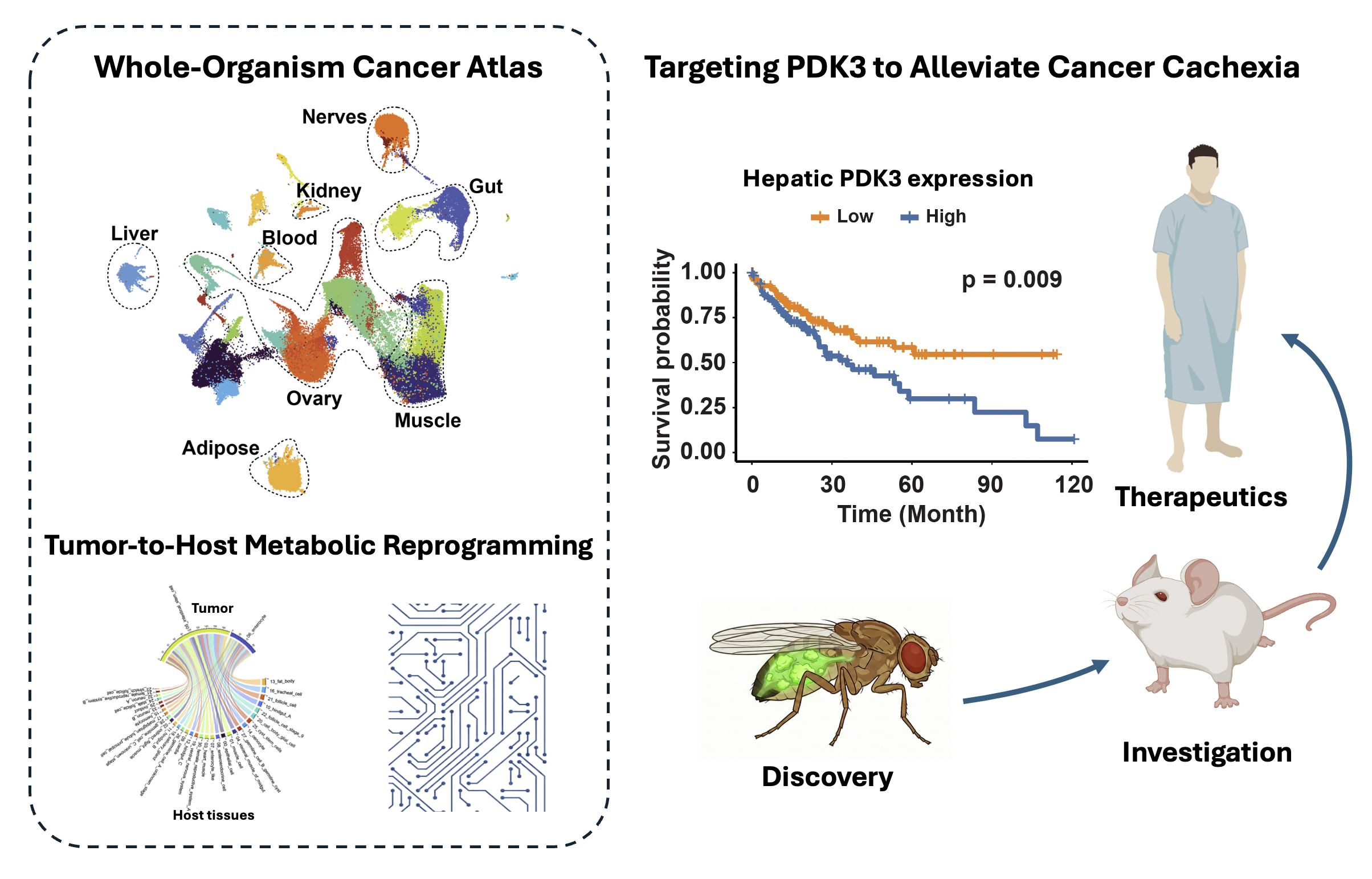
By mapping these organism-wide changes, we traced how tumor-derived signals reprogram host metabolism and drive systemic dysfunction. This work identified hepatic gluconeogenesis as a conserved driver of cancer cachexia and highlighted PDK3 as a promising therapeutic target.

Read the study
Diagram of the Liu Lab cancer cachexia framework: whole-organism cancer atlas, tumor-to-host metabolic reprogramming, and PDK3-targeted therapeutics validated from fly discovery to mouse investigation

Where this leads

Toward a Systems Biology of Human Disease

Cancer cachexia is our starting point, not our endpoint.

We are building a broader framework to understand how disease in one tissue disrupts the networks that sustain the whole organism. By combining whole-organism mapping with causal experiments across species, we aim to distinguish changes that accompany disease from mechanisms that actually drive it. Our goal is to uncover shared principles of systemic dysfunction and identify conserved mechanisms that can reveal new opportunities for intervention in human disease.

Join us

Build With Us

The Liu Lab sits at the intersection of fundamental discovery and clinical translation within the Cold Spring Harbor Laboratory–Northwell Health research ecosystem. This environment brings together cutting-edge basic science, advanced technologies, and direct connections to human disease and clinical research.

We are building a multidisciplinary program spanning genetics, systemic metabolism, evolutionary biology, computational science, and human disease. We welcome ambitious scientists and collaborators who want to tackle bold questions across biological scales—from molecules and cells to organs, organisms, and human health.

Join the LabCollaborate With Us
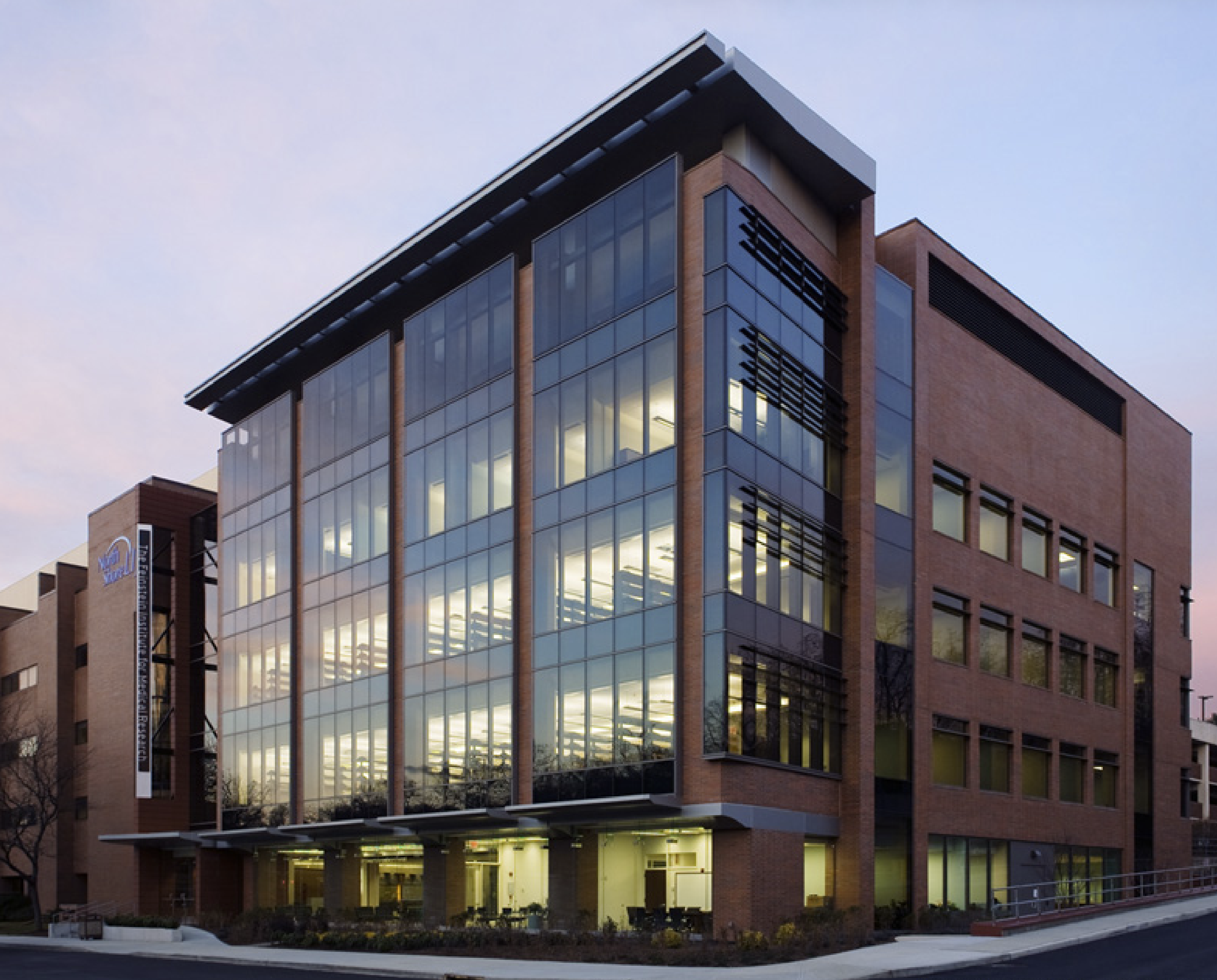
Exterior view of the Feinstein Institutes for Medical Research building at Northwell Health

Ying Liu Laboratory
Feinstein Institutes for Medical Research | Northwell Health


bioliu.com
Contact
yliu29@northwell.edu
© 2026 Ying Liu Laboratory